UX + app design case study

A companion app for debt relief

Client
American Consumer Credit Counseling
Role
Lead UX and UI designer
Team
RocketFarm Studios
Format
iOS mobile application
Stage
Minimum viable product
Dates
2022–2023
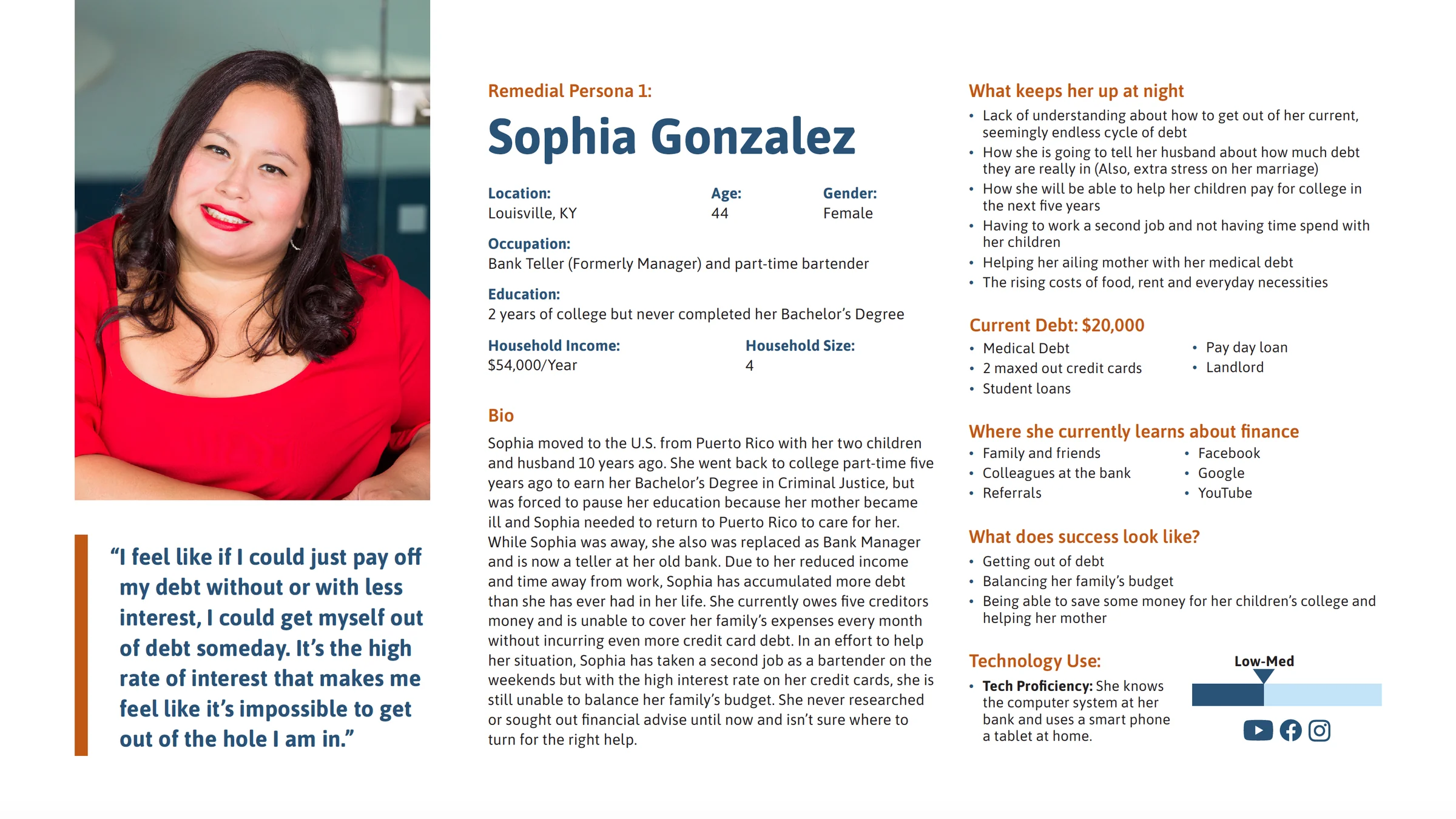
Persona sheet for Remedial Persona 1, Sophia Gonzalez, 44, a bank teller and part-time bartender in Louisville, KY, with her photo, the quote I feel like if I could just pay off my debt without or with less interest, I could get myself out of debt someday, her bio, current debt of $20,000, what keeps her up at night, where she learns about finance, what success looks like, and her technology use.
The challenge

Assist credit counselors and empower people with debt

Help American Consumer Credit Counseling (ACCC) ease the workload of its credit counselors and get more people out of debt by enrolling them in its Debt Management Program (DMP).

The process

Learning from the counselors

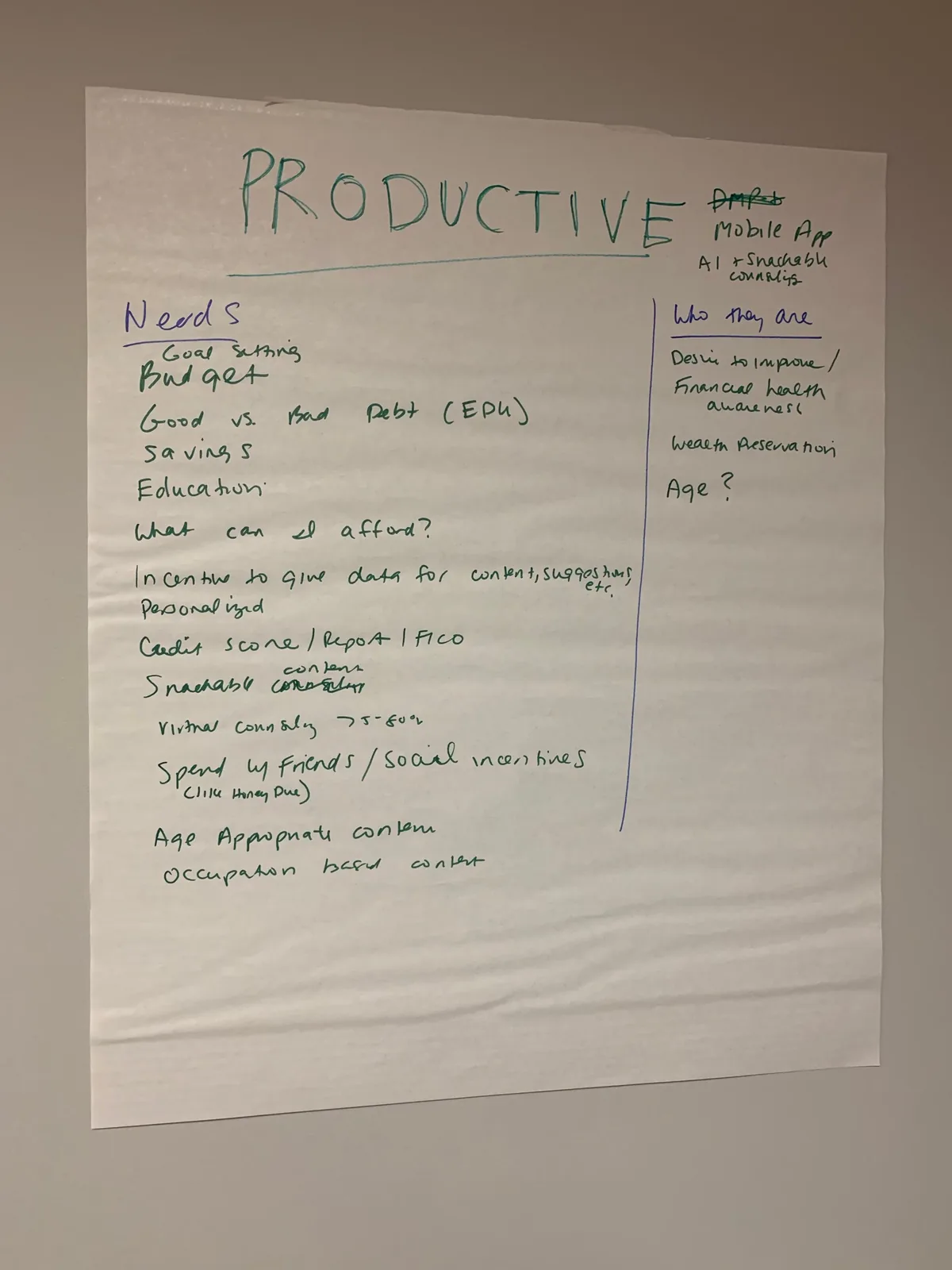
I met with 15 experienced credit counselors to learn about the DMP, who is eligible to enroll, and how the counselors help members pay off their debt and graduate from the program.
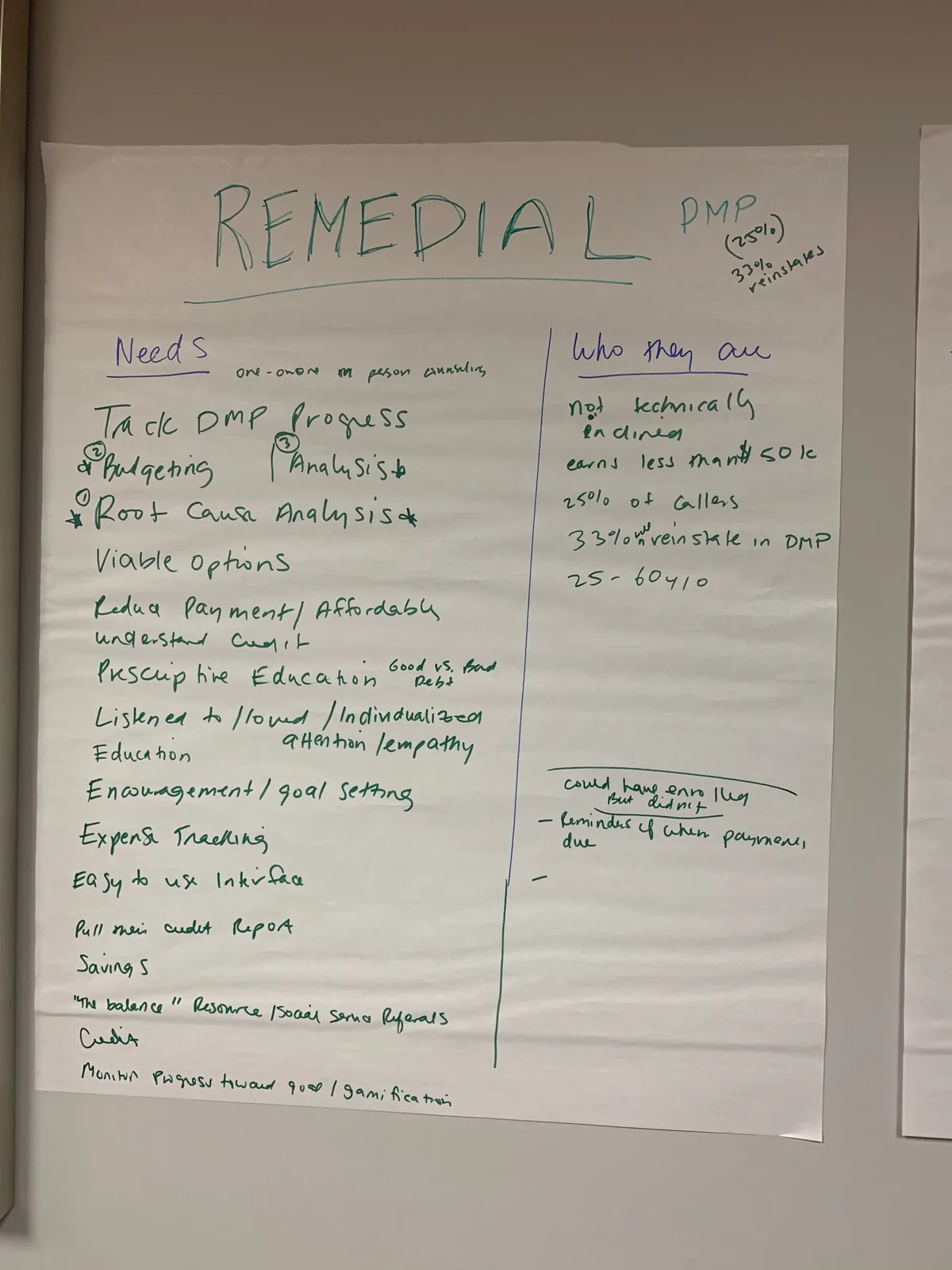
Handwritten flip-chart sheet titled Remedial, DMP, listing member needs such as tracking DMP progress, budgeting, root cause analysis, understanding credit, encouragement and goal setting, and who they are.
Handwritten flip-chart sheet titled Productive, mobile app, AI and snackable counseling, listing needs such as goal setting, budget, good versus bad debt, savings, credit score, and personalized content.
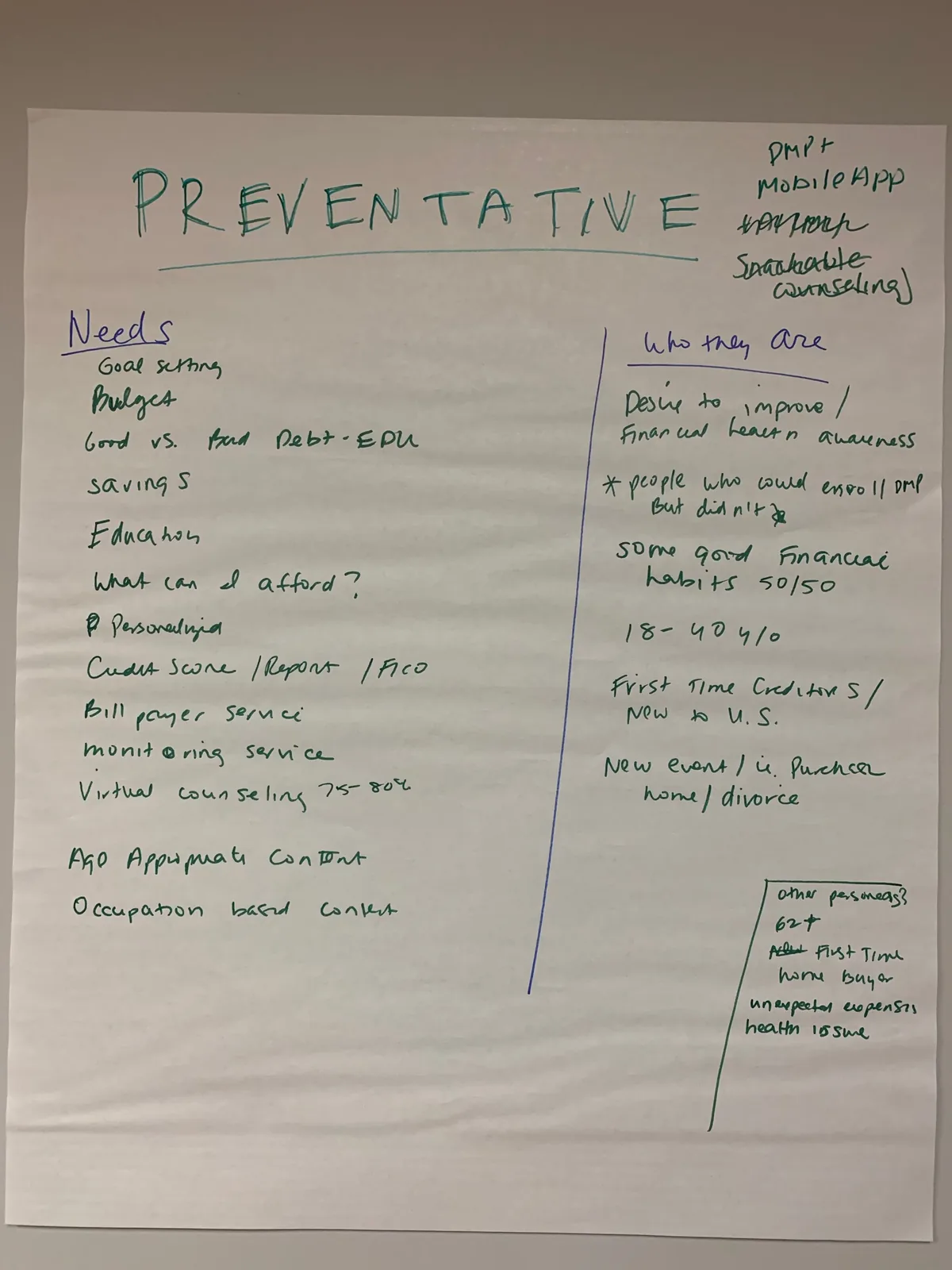
Handwritten flip-chart sheet titled Preventative, DMP plus mobile app, listing needs such as goal setting, budget, savings, education, credit score, and bill payer and monitoring services, and who they are.
Brainstorming member personas and their needs with ACCC’s credit counselors

What members need to get out of debt and graduate from the DMP:

  1. The status of their debt
  2. A simple breakdown of their budget
  3. Quick tips to help them stay on track

What members need to stay out of debt and build wealth:

  1. An understanding of what makes up their credit, such as credit utilization and their debt-to-income ratio
  2. Future financial goals to work toward
Intake

Vetting users for the DMP

Before the mobile application, enrollment took about an hour over the phone. ACCC needed to understand applicants’ total debt and debt types. They also built a budget.

If callers were eligible and enrolled, ACCC negotiated with their creditors and consolidated their debts into a single, affordable monthly payment.

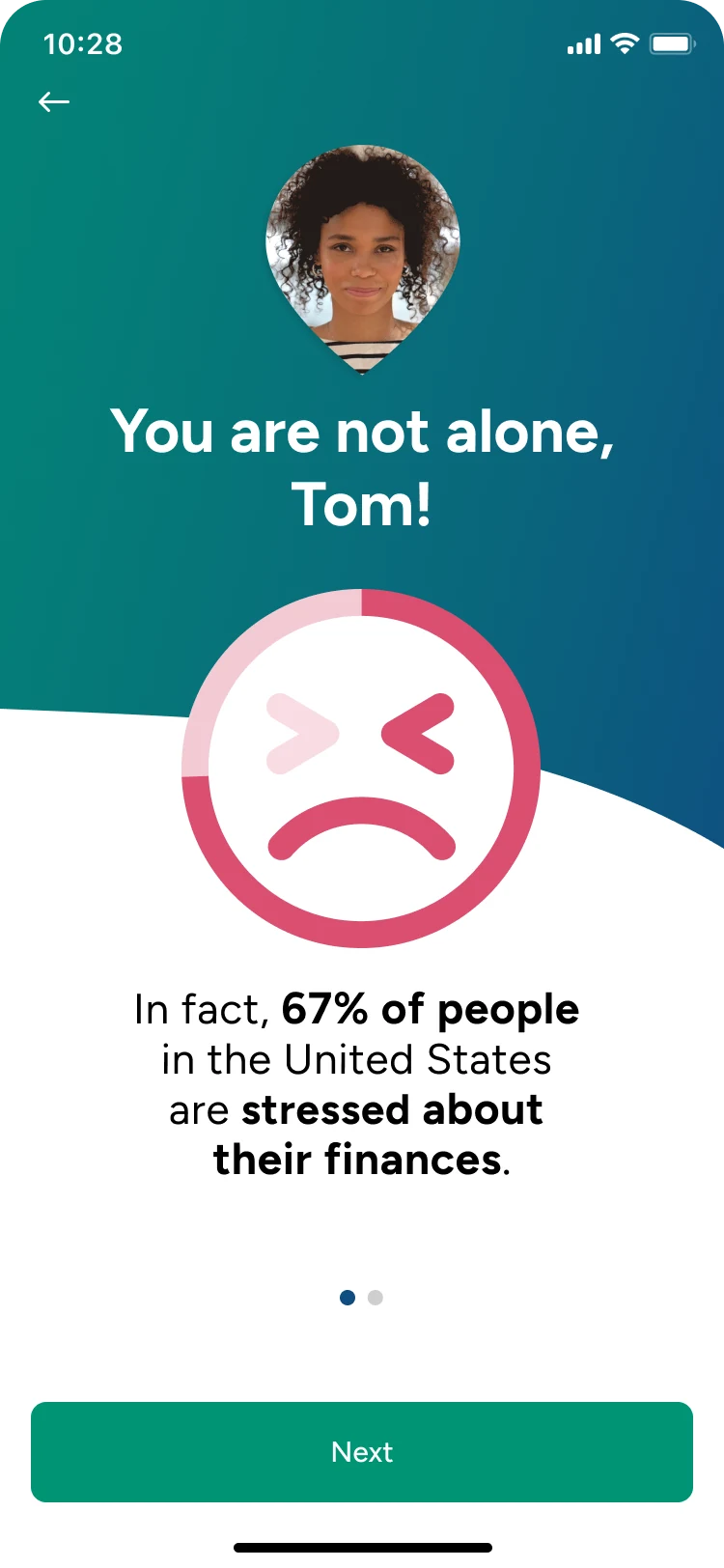
This was the first full flow I designed. I knew debt was stressful, so I made the experience uplifting and as fun as possible, with journey imagery to motivate users and light-hearted animations.
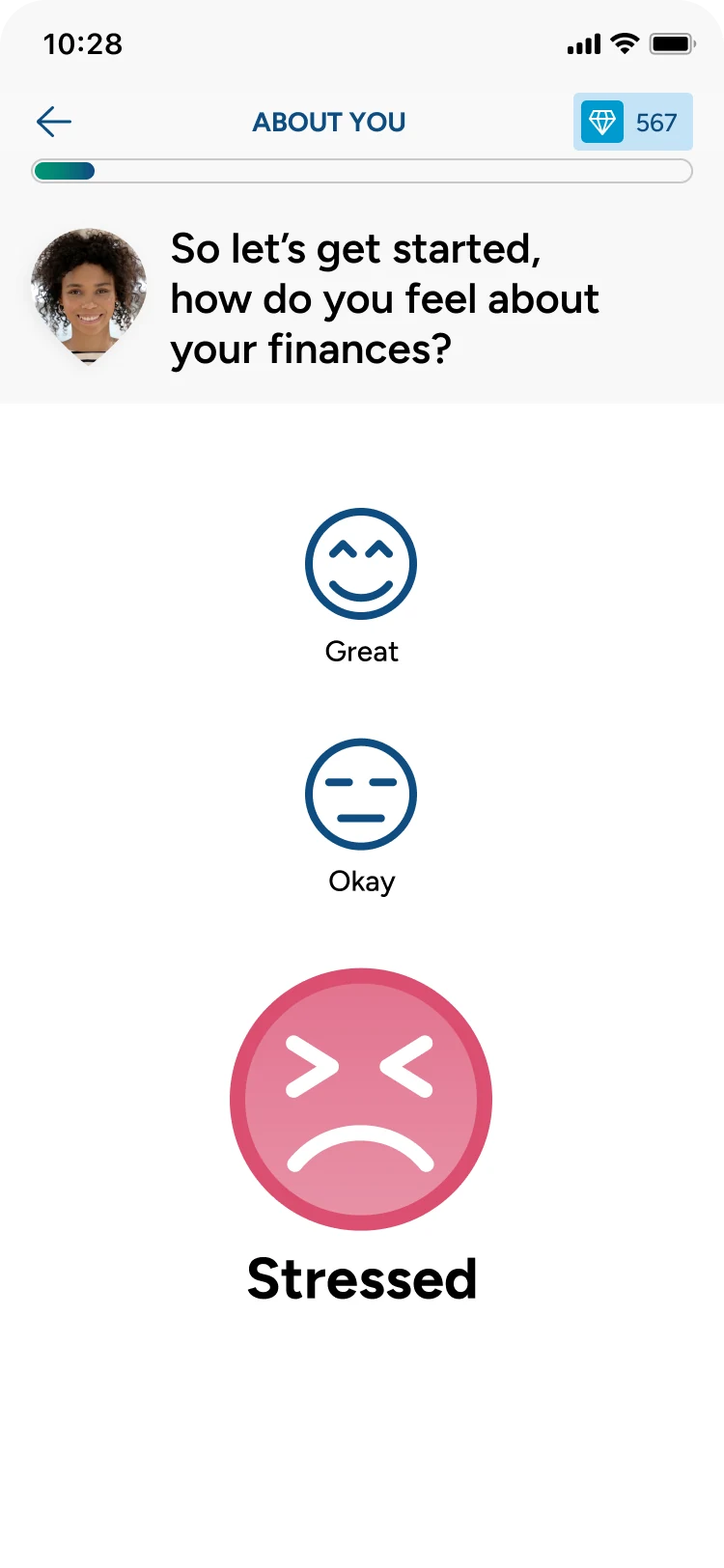
Intake screen titled About you, with a progress bar and a coach photo asking So let’s get started, how do you feel about your finances? Three faces offer Great, Okay, and Stressed, with Stressed selected.
Intake opens by asking how users feel about their finances
Follow-up screen on a teal gradient: You are not alone, Tom! A stressed face inside a ring chart, and the line In fact, 67% of people in the United States are stressed about their finances, with a Next button.
Choosing Stressed brings up a reassuring statistic
From the intake flow

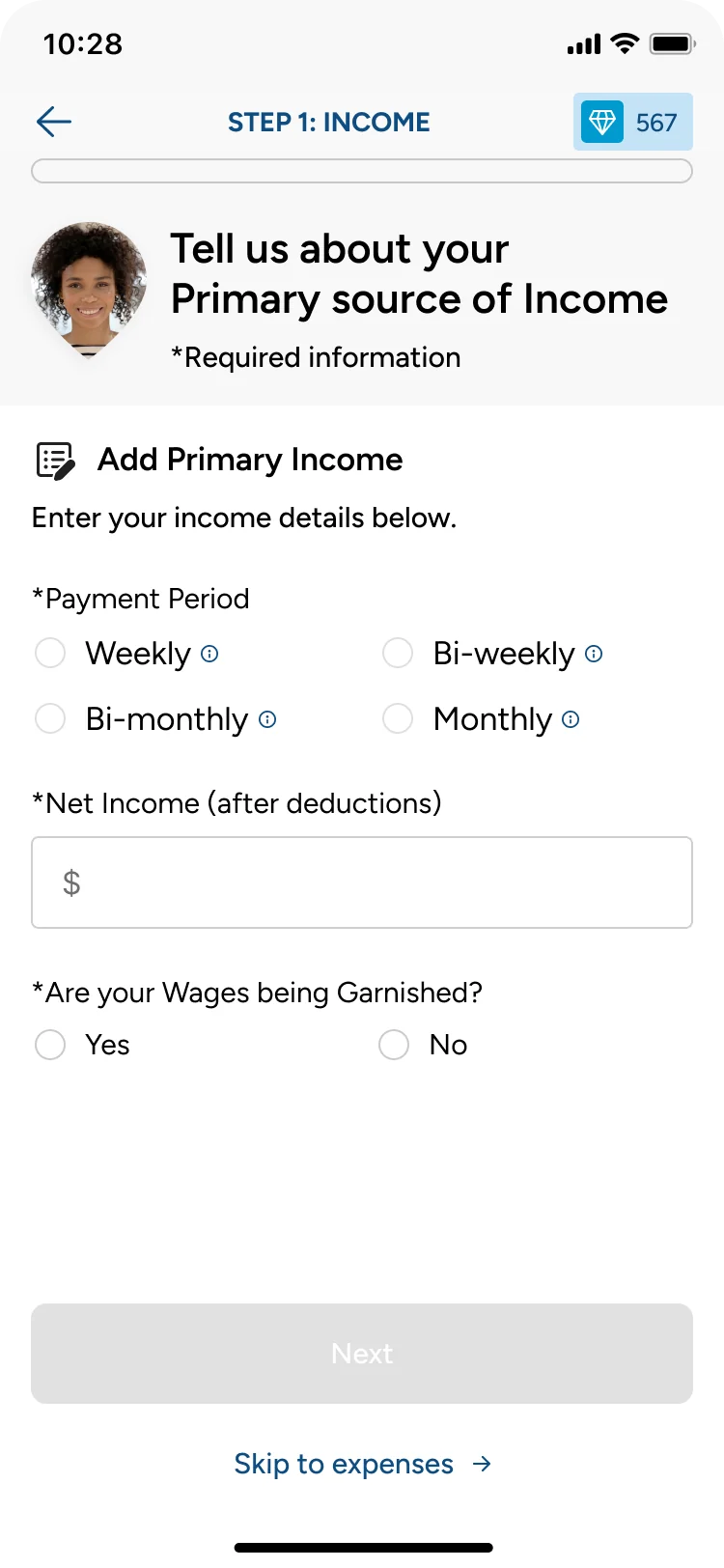
A sampling of screens from the full intake flow, from the opening overview to a counselor handoff. Scroll sideways to see them all.
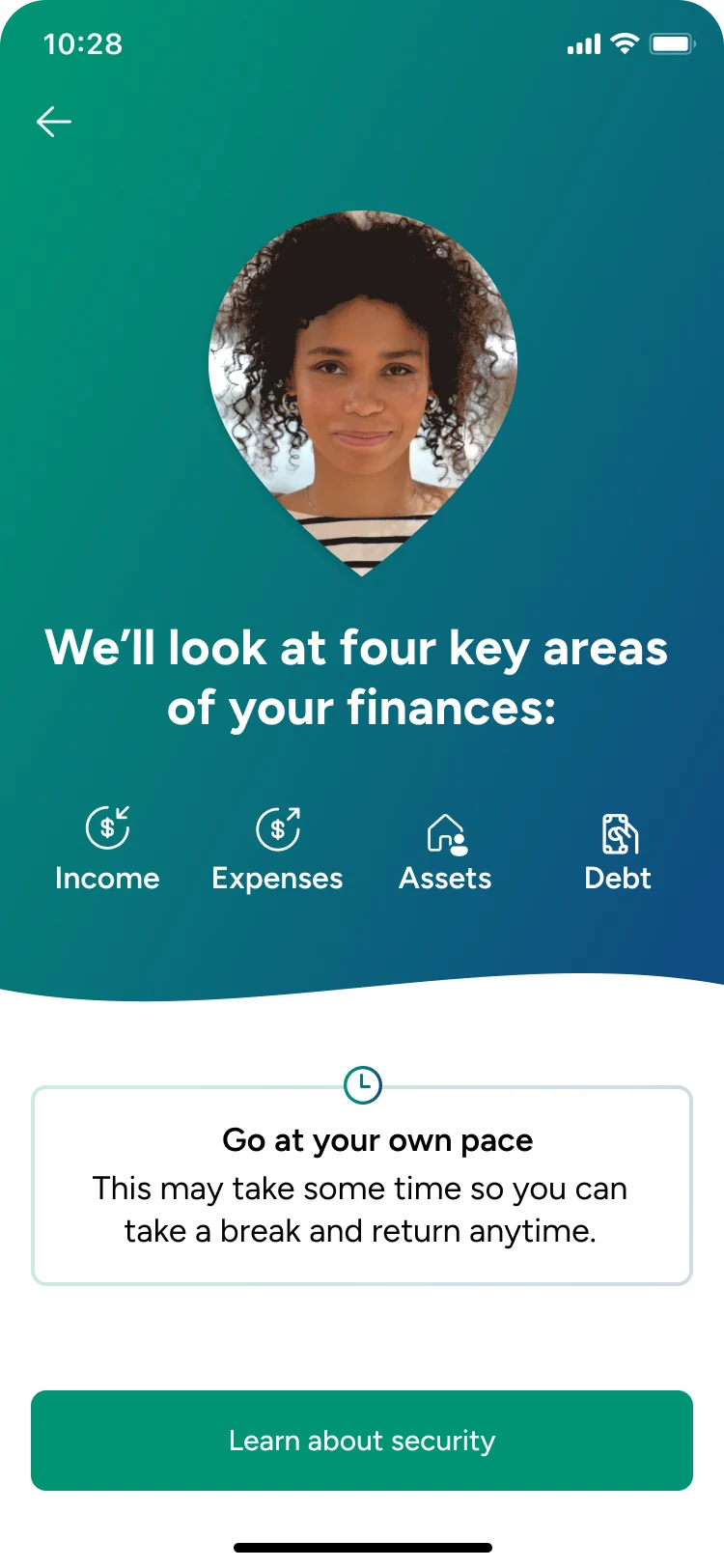
  1. Intro screen with the coach photo: We’ll look at four key areas of your finances: income, expenses, assets, and debt. A note says Go at your own pace, with a Learn about security button.
    1Overview
  2. Step 1, Income: Tell us about your primary source of income, with payment period options, a net income field, a question about wage garnishment, and a Skip to expenses link.
    2Income
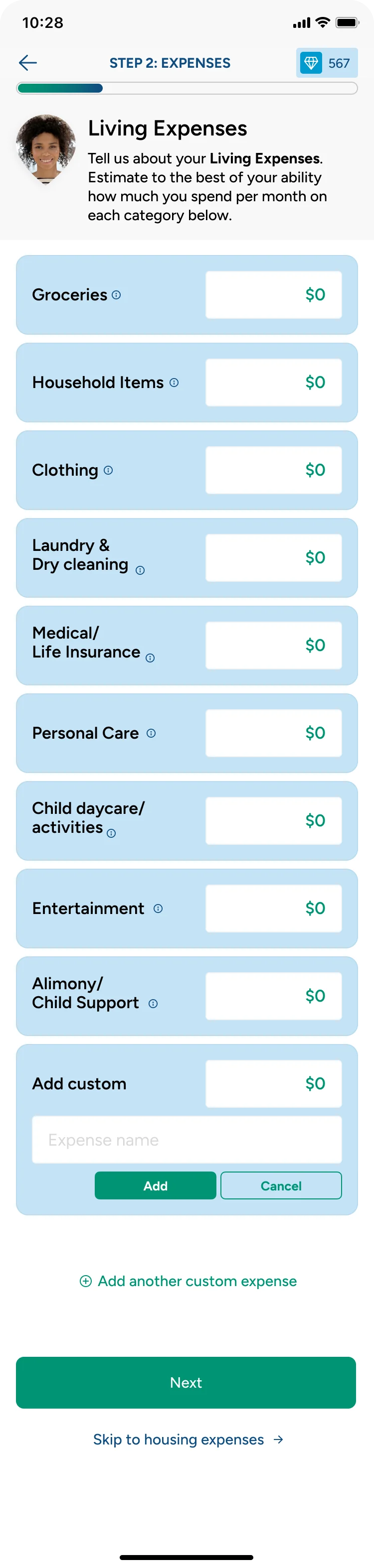
  3. Step 2, Expenses: a list of living expense categories such as groceries, household items, clothing, medical and life insurance, child daycare, and entertainment, each with a dollar field, plus custom expenses.
    3Expenses
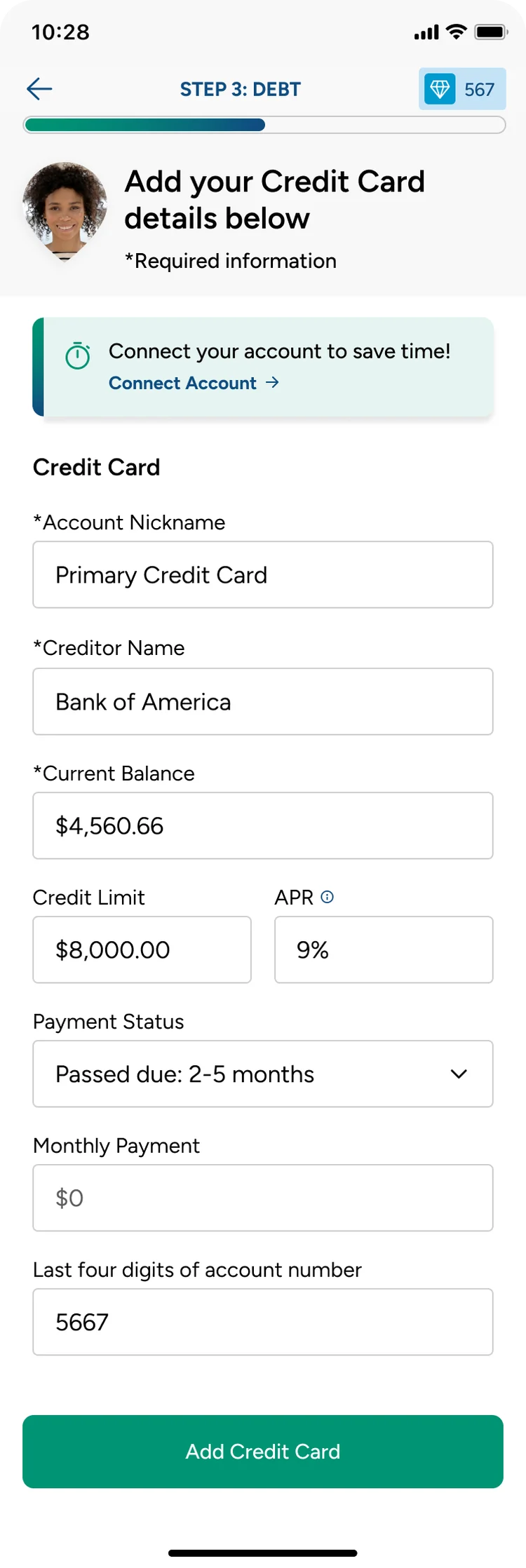
  4. Step 3, Debt: Add your credit card details, with a Connect your account to save time prompt, and fields for nickname, creditor, balance, credit limit, APR, payment status, monthly payment, and the last four digits.
    4Debt
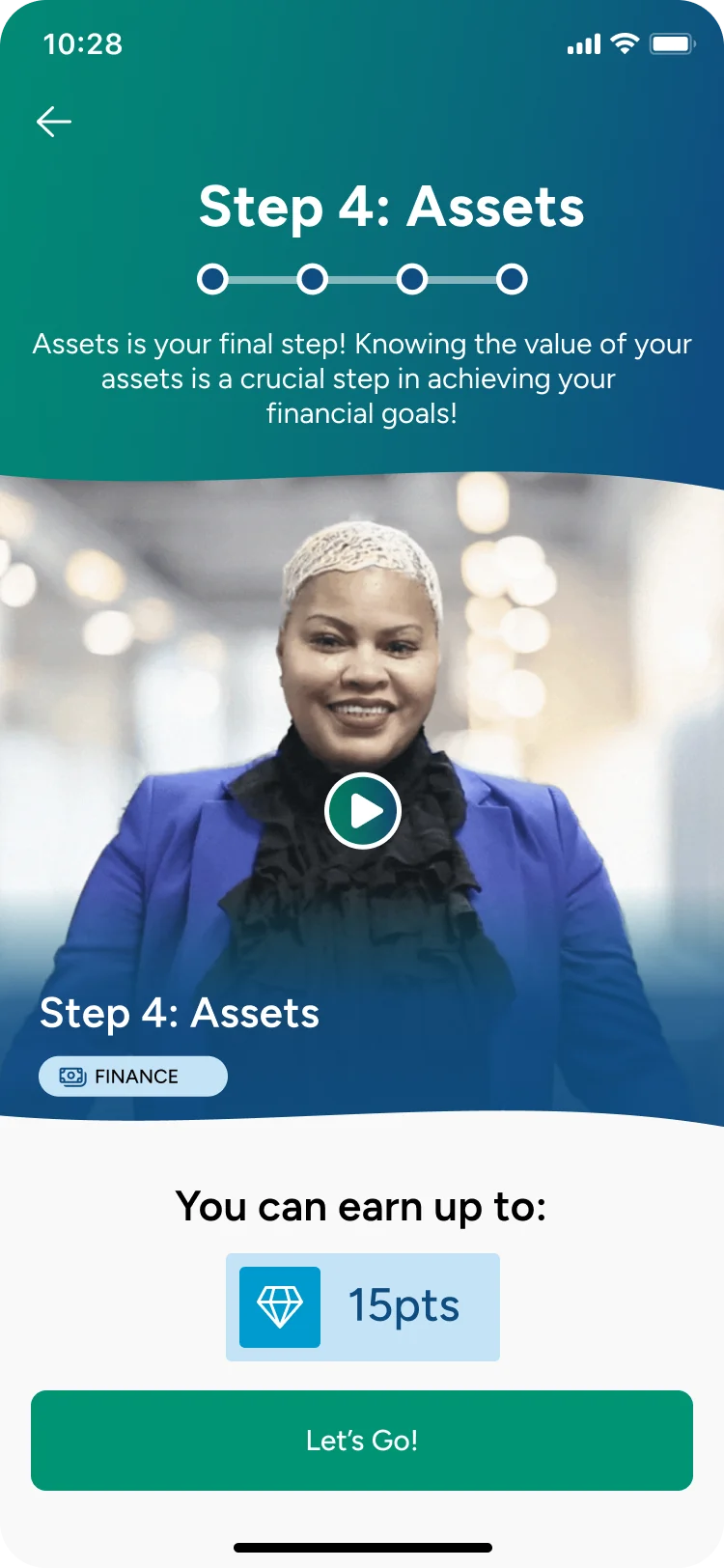
  5. Step 4, Assets: Assets is your final step, with a short video from a counselor and a note that users can earn up to 15 points, and a Let’s Go! button.
    5Assets
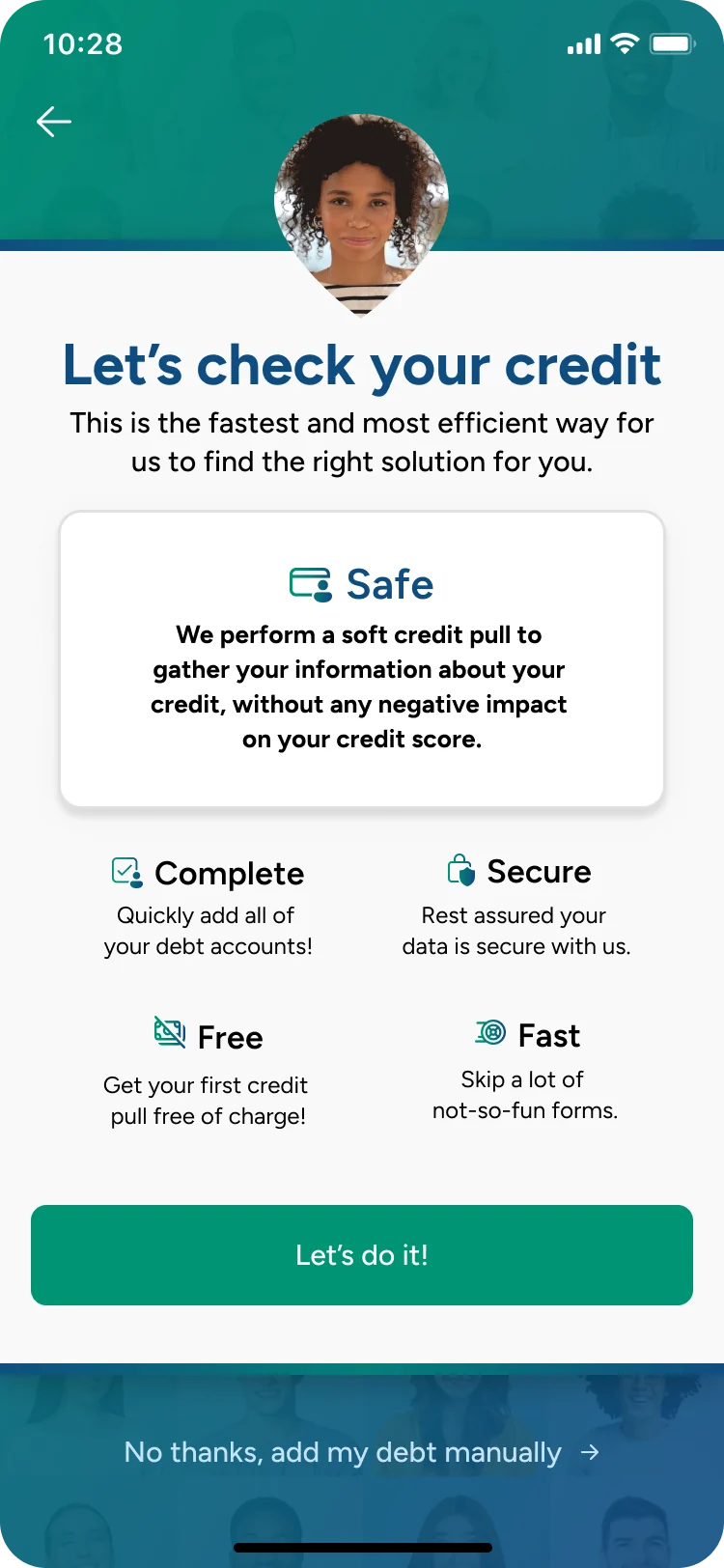
  6. Let’s check your credit: a soft credit pull with no impact on your score, described as complete, secure, free, and fast, with a Let’s do it! button and an option to add debt manually.
    6Credit check
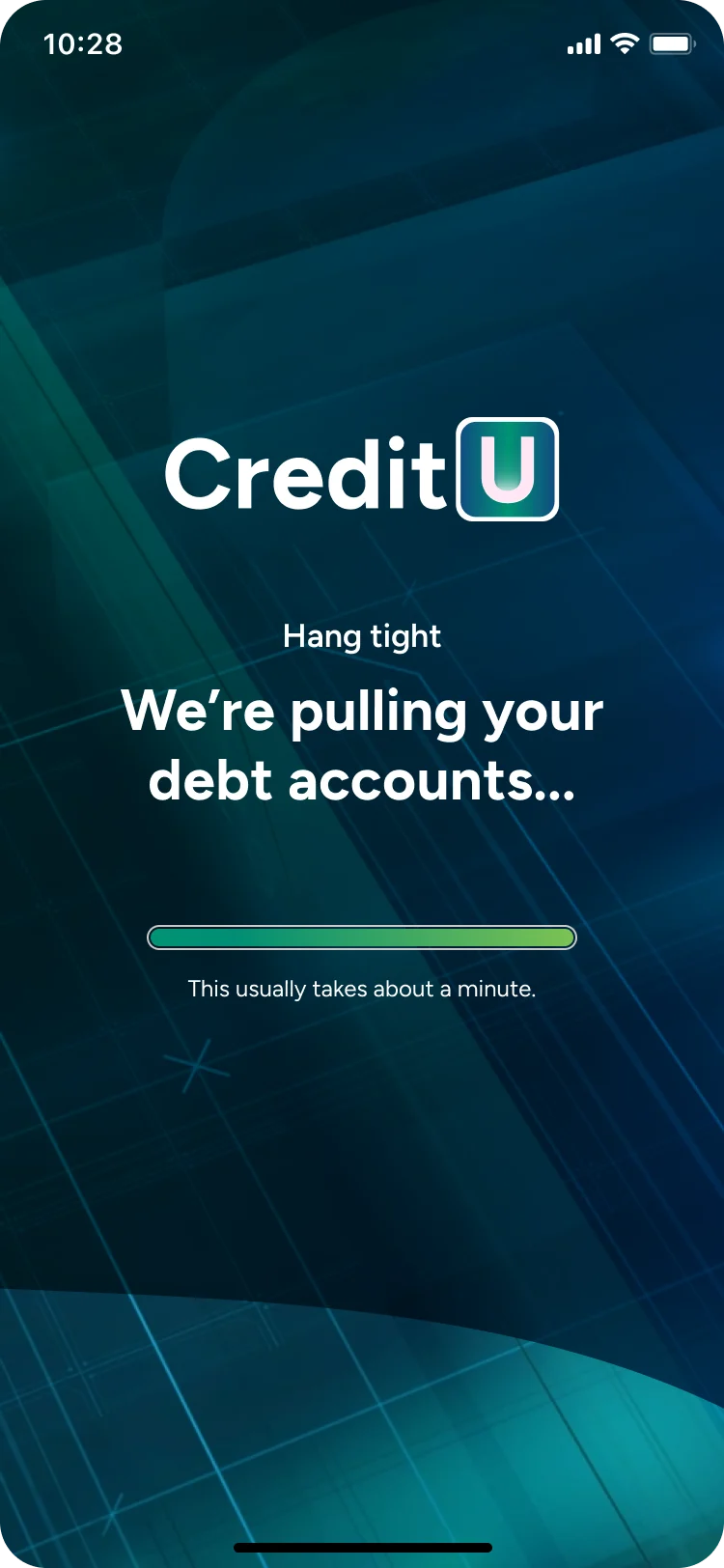
  7. CreditU loading screen: Hang tight, we’re pulling your debt accounts. This usually takes about a minute.
    7Pulling accounts
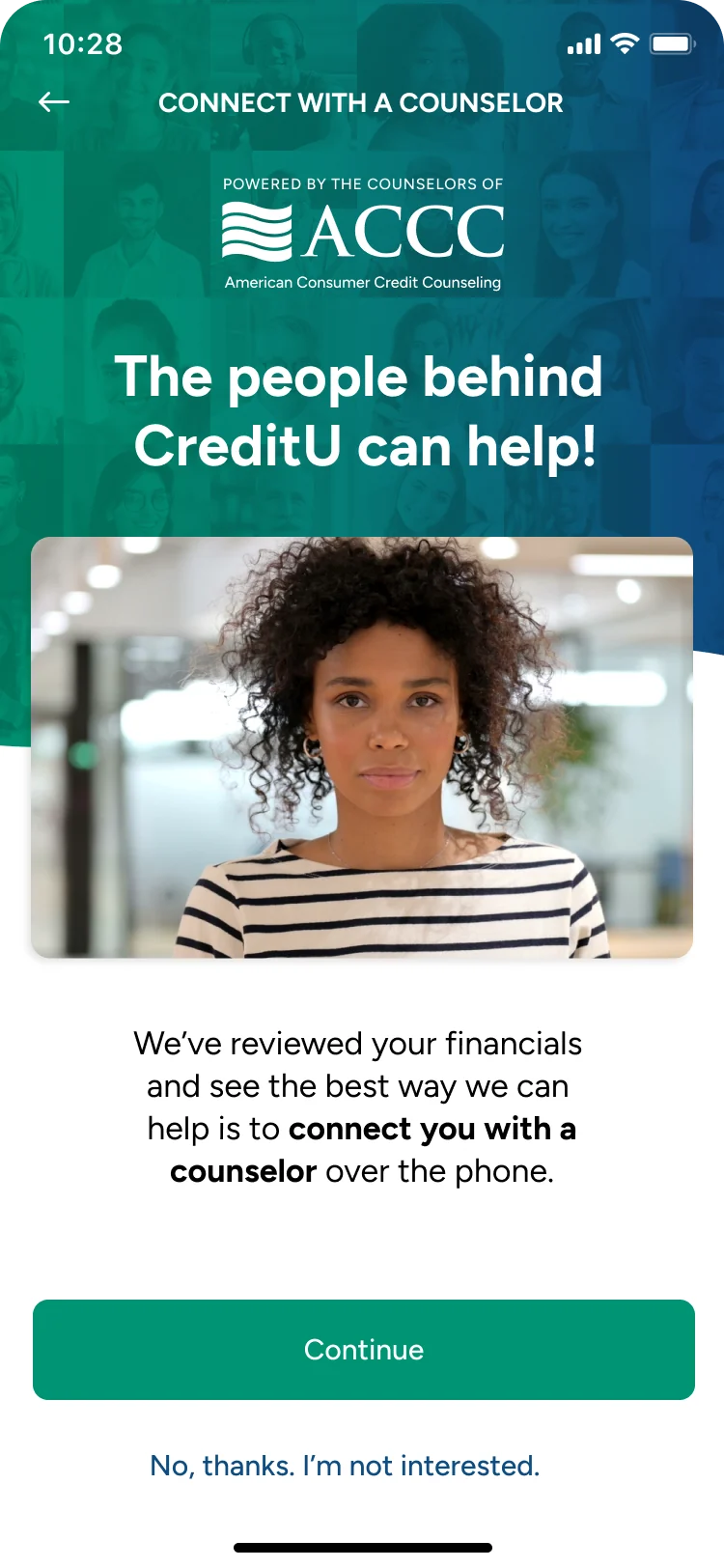
  8. Connect with a counselor, powered by the counselors of ACCC: The people behind CreditU can help! A note says the best way to help is to connect you with a counselor over the phone.
    8Counselor handoff
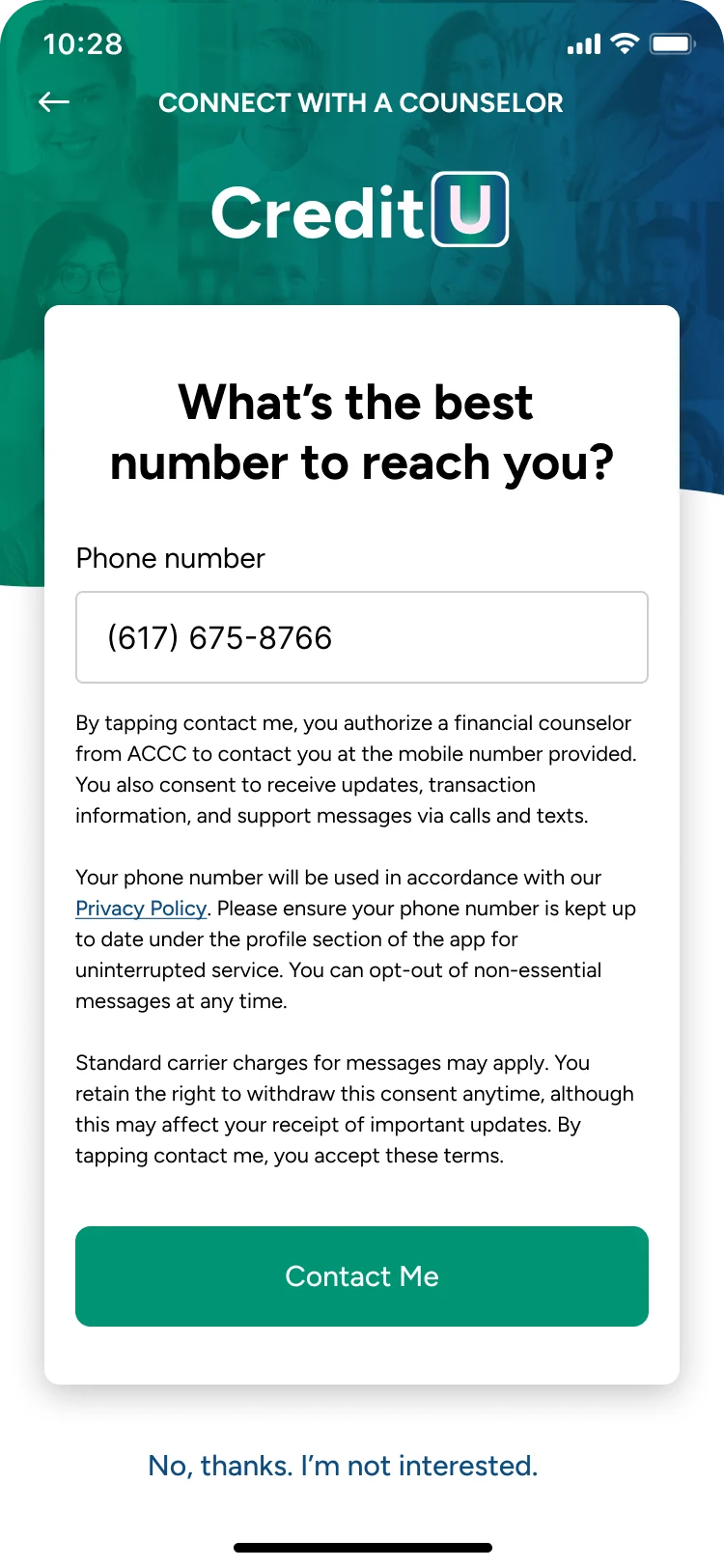
  9. What’s the best number to reach you? A phone number field with consent text and a Contact Me button.
    9Contact details
Design decision

A simple slider, not a stack of cash

I wanted to make entering financial information, including debt, playful. One experiment was a counter interface: as users increased their debt amount, more money was added to an illustrated stack.

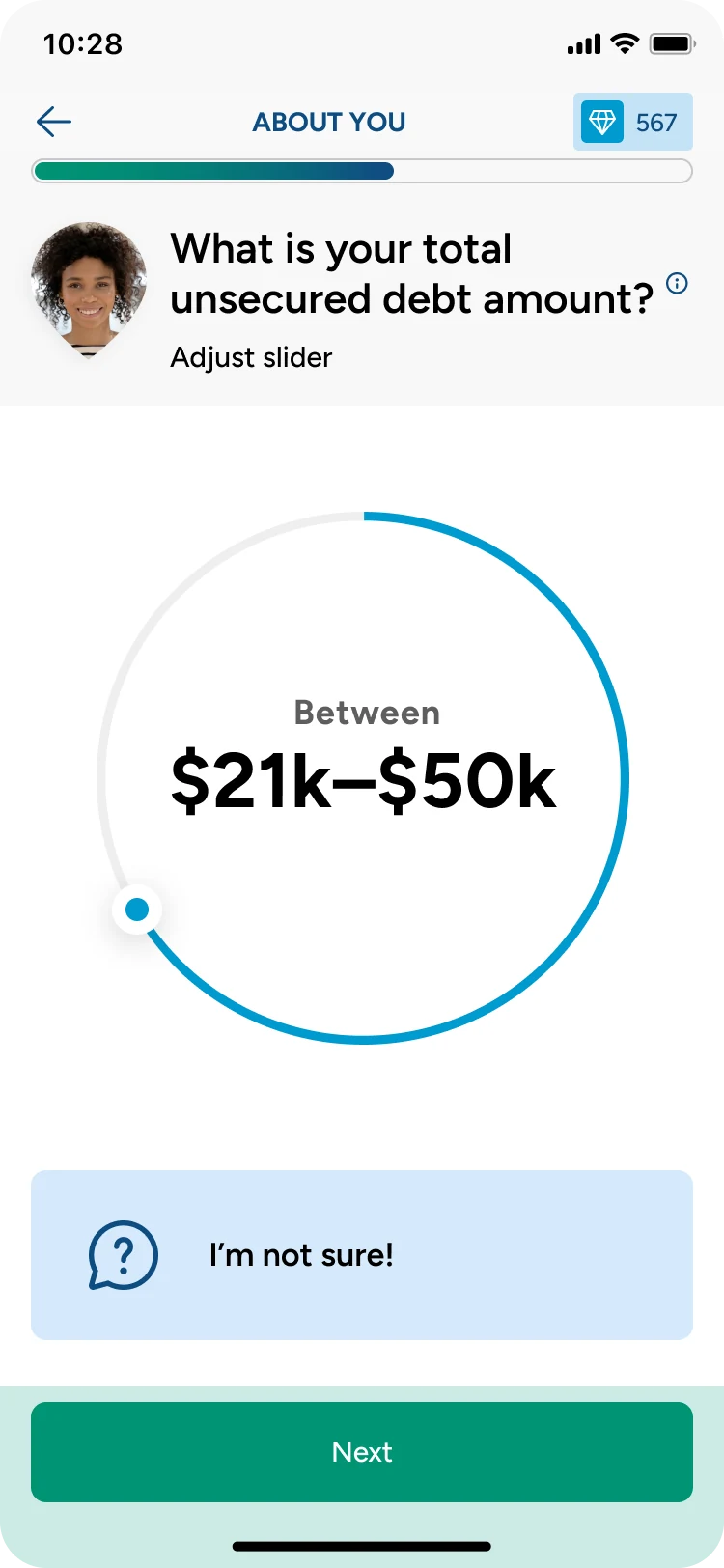
Then, in discussions with our project manager, I realized I was trying to be too clever and not sensitive enough to the problem. The final design used a radial slider with a debt range instead.
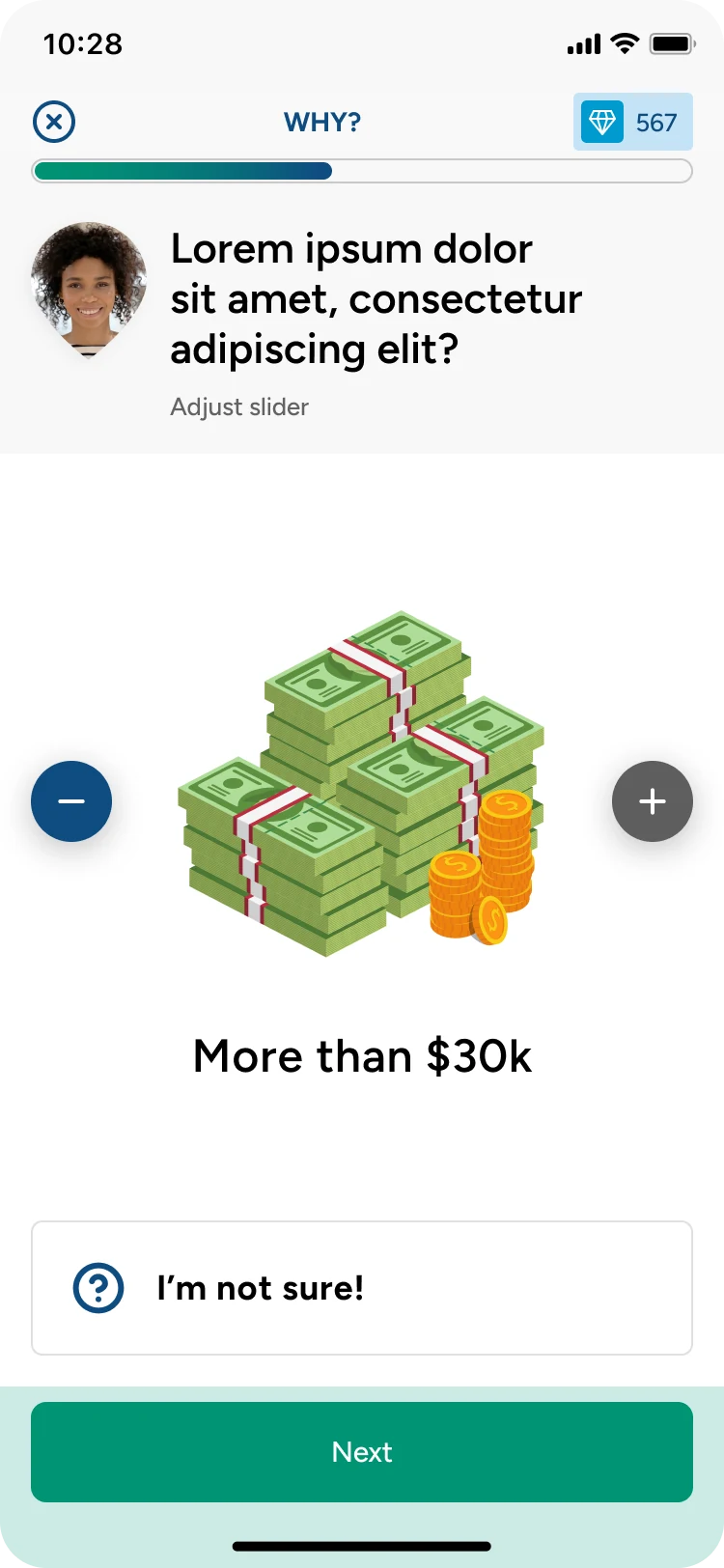
Early draft of the debt question: an illustrated stack of cash and gold coins between minus and plus buttons, labeled More than $30k, with an I’m not sure! option and a Next button.
Rejected: the counter grew a stack of money as debt went up
Final design asking What is your total unsecured debt amount? with a circular slider set to Between $21k–$50k, an I’m not sure! option, and a Next button.
Final: a radial slider with a debt range
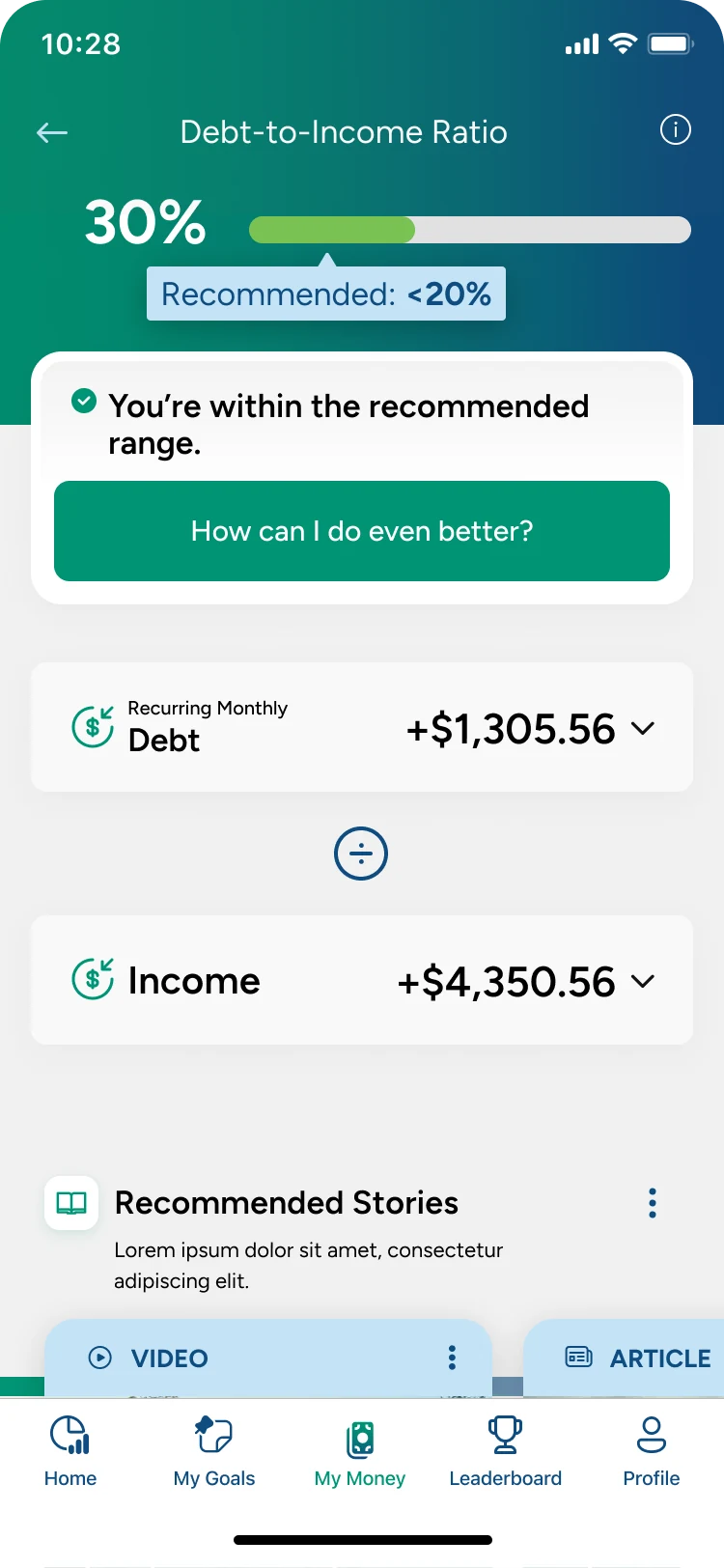
My Money screen for the debt-to-income ratio: 30% shown against a recommended range, a note reading You’re within the recommended range with a How can I do even better? button, then monthly debt of $1,305.56 divided by income of $4,350.56, and recommended stories below.
The debt-to-income ratio, laid out as its formula
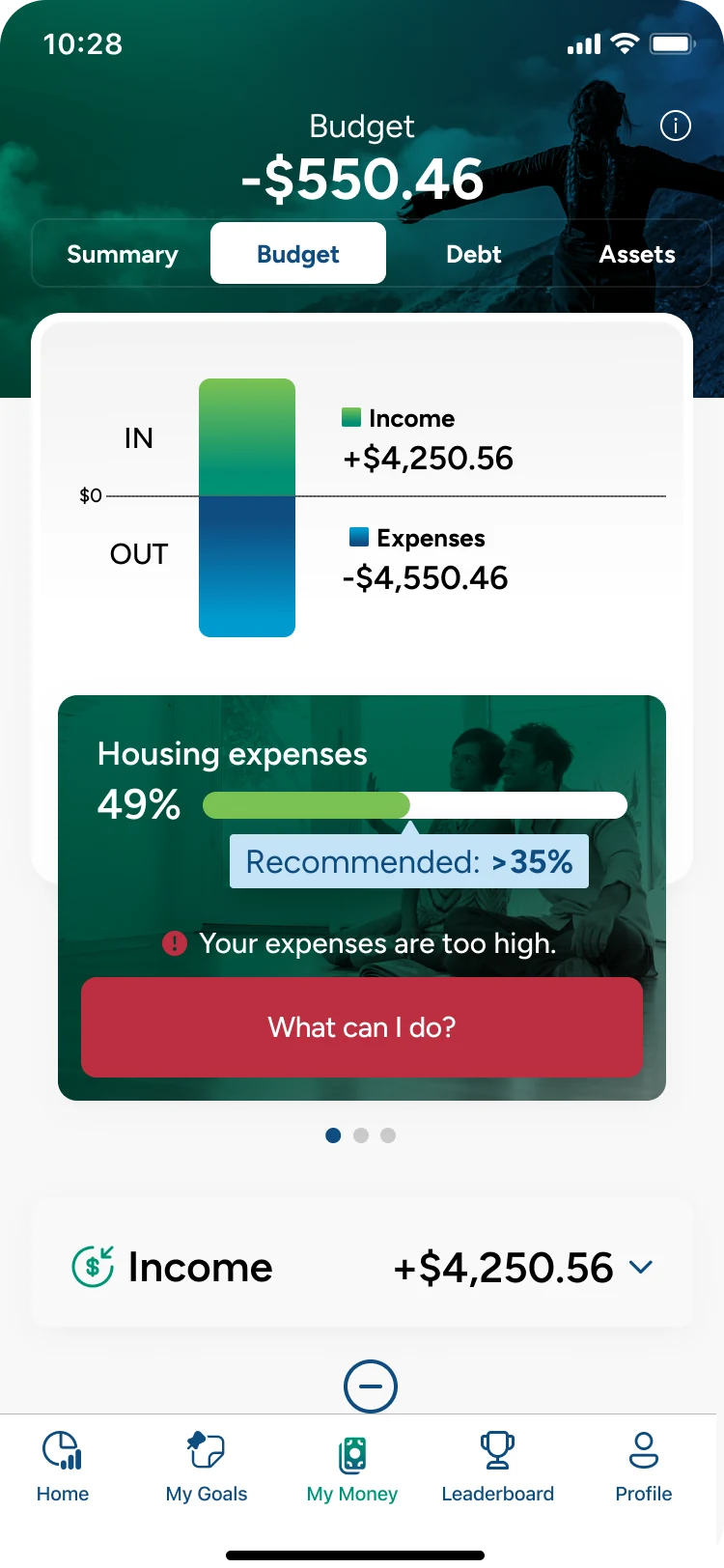
My Money budget screen showing a monthly shortfall of $550.46: an in-and-out bar chart with income of $4,250.56 and expenses of $4,550.46, and a housing expenses card at 49% against a recommended limit with the warning Your expenses are too high and a What can I do? button.
The budget flags overspending by category
Working the program

Helping members through the DMP

In the My Money section, I designed budget information to teach users key financial terms. For instance, the debt-to-income ratio visually showed its formula (debt/income). Members could then drill down to see the actual sources of debt and income behind each figure.

The application also flagged overspending and, with AI, offered actionable tips to fix problem areas.

Details

More ways to support members

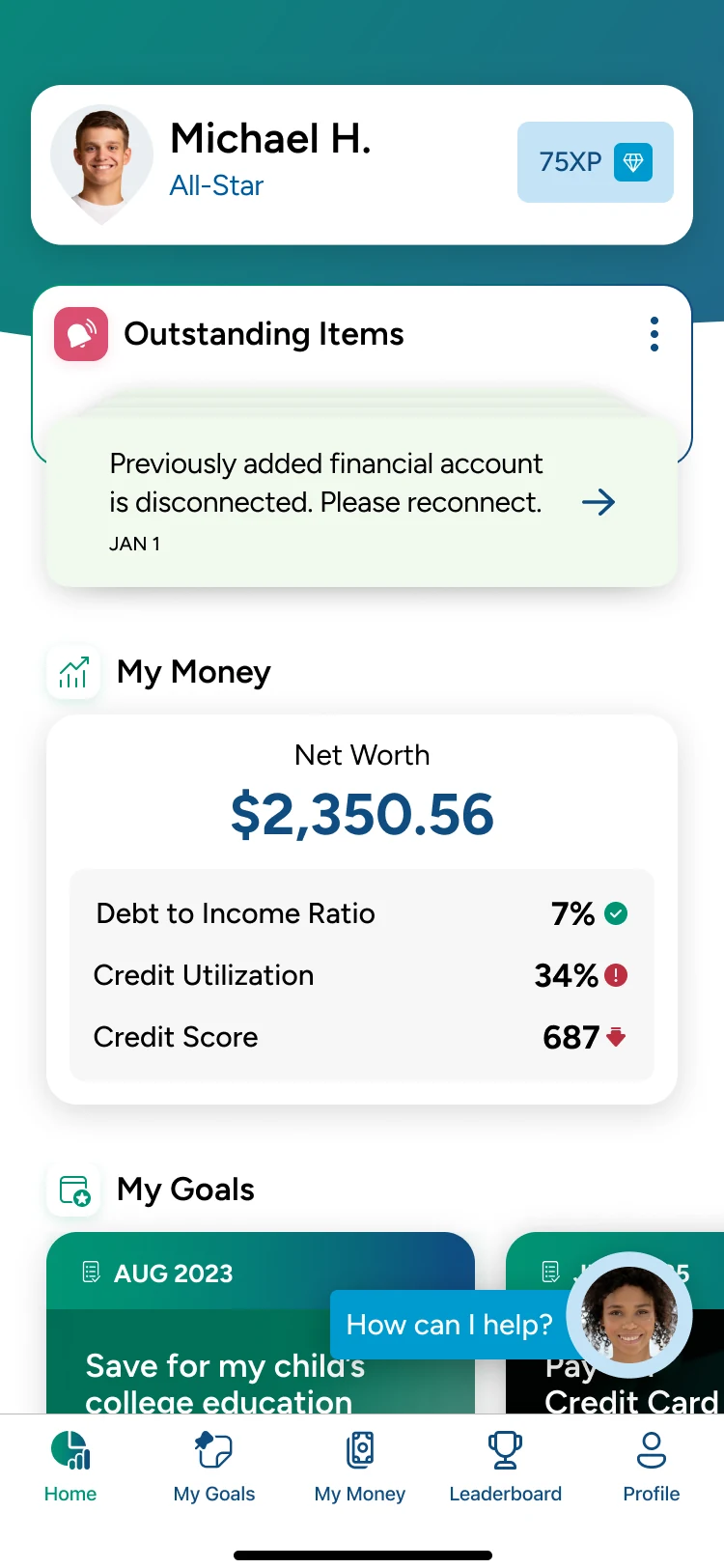
Home dashboard for Michael H., All-Star, 75 XP: an Outstanding Items card asking him to reconnect a financial account, a My Money card with net worth of $2,350.56, debt-to-income ratio, credit utilization and credit score, My Goals cards, and a How can I help? chat button.

Dashboard

The application also had a dashboard that prioritized members’ AI suggestions, program status, and goals.
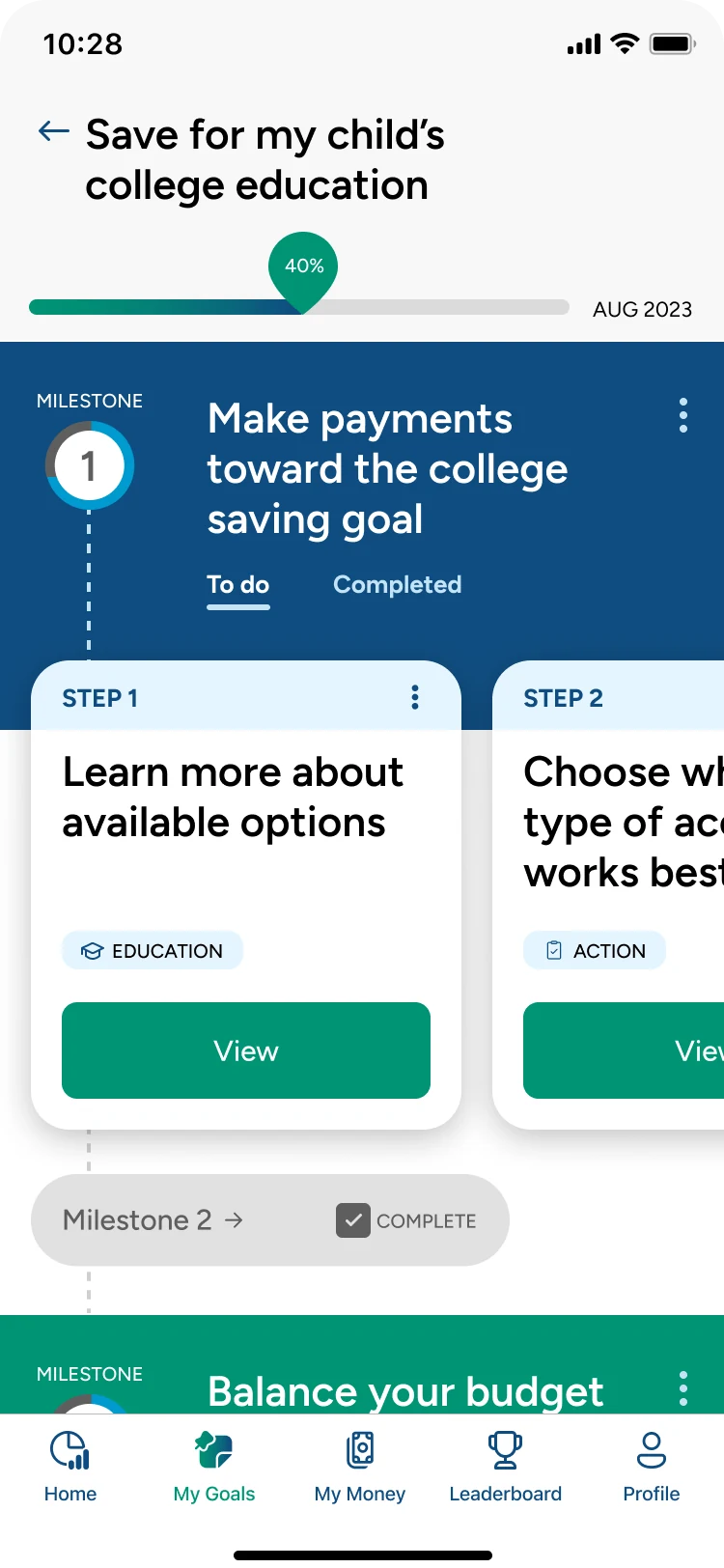
Goal detail screen for Save for my child’s college education, 40% complete with an August 2023 target. Milestone 1, Make payments toward the college saving goal, holds step cards: Step 1, Learn more about available options, tagged Education, and Step 2, Choose which type of account works best, tagged Action, each with a View button. Milestone 2 is marked complete.

Goals

The goals section helped members see a better financial future after the DMP. Each goal was broken down into mini-tasks to complete. Some were real-world tasks, like opening a savings account, and others were digital, like articles to read or videos to watch.
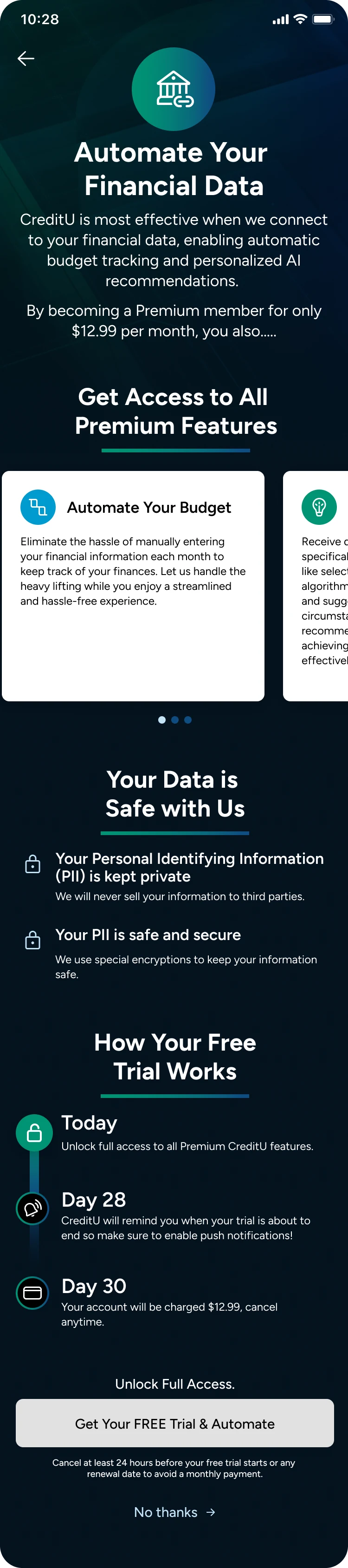
Premium upgrade screen, Automate Your Financial Data: CreditU explains that connecting financial data enables automatic budget tracking and personalized AI recommendations for $12.99 a month, followed by premium feature cards, a Your Data is Safe with Us section, a free trial timeline for today, day 28 and day 30, and a Get Your FREE Trial and Automate button.

Premium and Plaid

The application had a premium version, which allowed members to automatically connect their financial information via Plaid. That powered automatic budget tracking and more personalized AI recommendations, and a 30-day free trial let members try it before paying.

Outcome

From counselor sessions to the App Store

Before launch, we tested the designs with real ACCC clients and revised them. We delivered a complete MVP, and the application launched in the iOS App Store. Our work ended with the MVP.
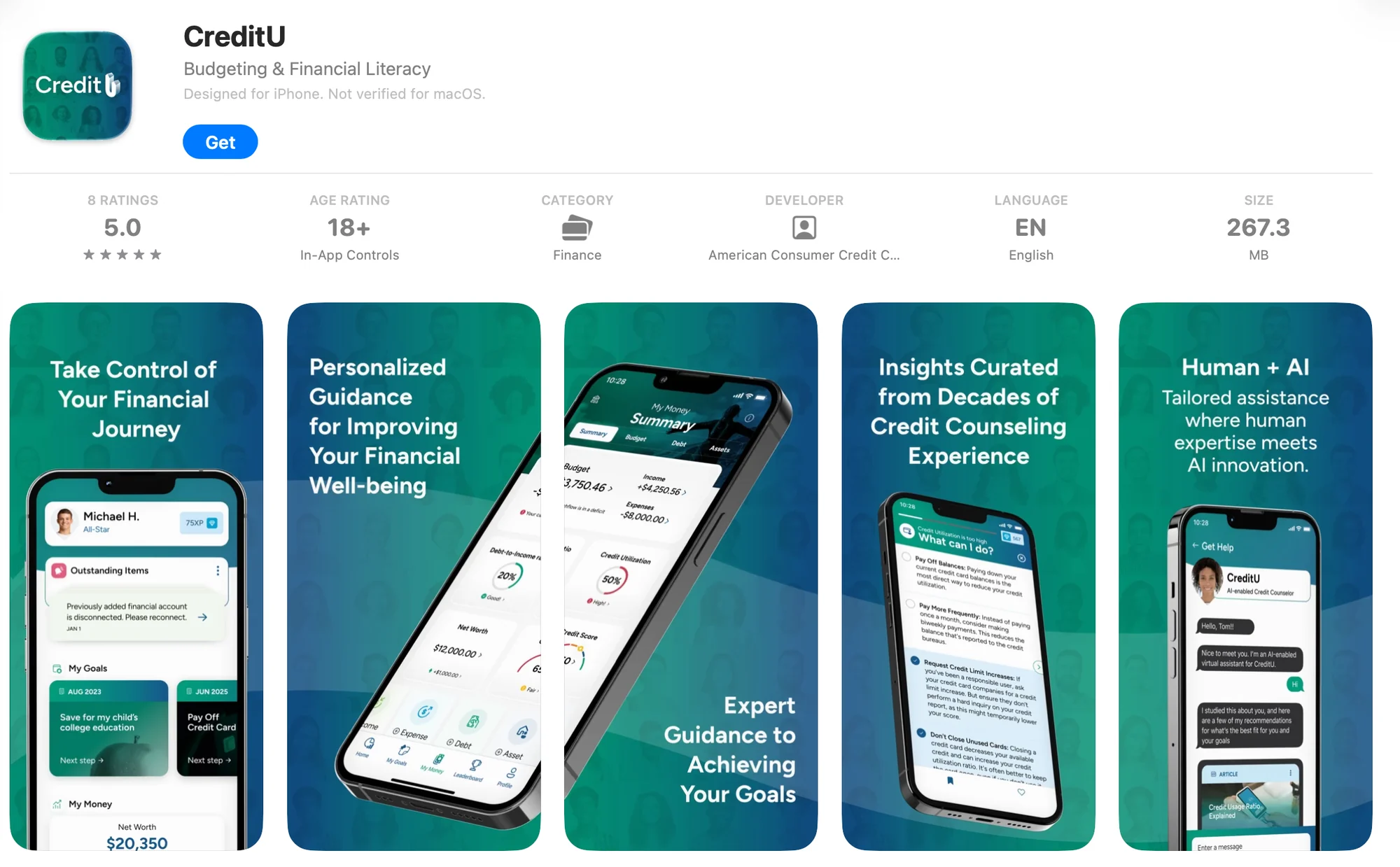
CreditU listing in the Apple App Store: Budgeting and Financial Literacy, a 5.0 rating from 8 ratings, Finance category, developer American Consumer Credit Counseling, and five promotional screenshots including Take Control of Your Financial Journey and Human + AI.
CreditU in the Apple App Store

Designed, tested, and live in the iOS App Store.

Tested with real ACCC clients before launch.

Rated 5.0 stars in the App Store from its first 8 ratings.

What I’d measure next

If the work had continued, I would have tracked how many people finished intake in the application, how much counselor time it saved, and how many members completed a goal after graduating from the DMP. Those numbers would show whether the application did what we designed it to do.

Have a project, a role, or a class in mind?